
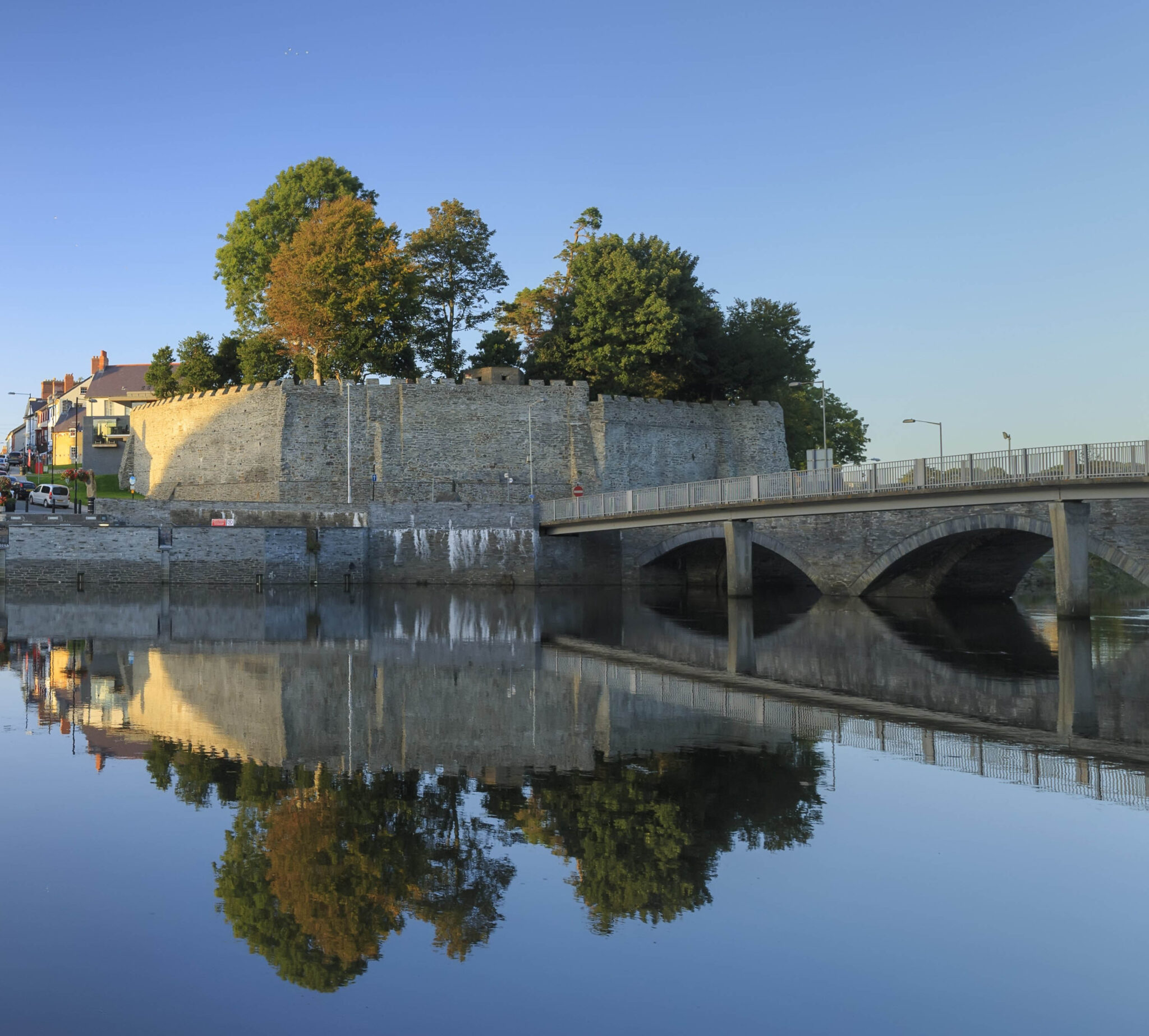
Explore the Castle
Discover the Castle's Attractions
Scroll through the history of our Castle using the interactive timeline below to understand all that the Castle has been through.


The Eisteddfod Chair
The Chair is a nine-foot sculpture reimagining the original Eisteddfod chair. This artwork, carved by Paul Clarke, features hunting symbols, a crown, and the three ravens from Lord Rhys’s crest, reflecting the cultural heritage of the site.
The Eisteddfod Chair
The Whale Bone Arch
In the mid-19th century, Captain James Ellis, a local sea Captain, gifted two whale jawbones to the residents of Castle Green House as a wedding present. These bones were erected to form an arch, a popular garden ornamentation during that era.
The Whale Bone Arch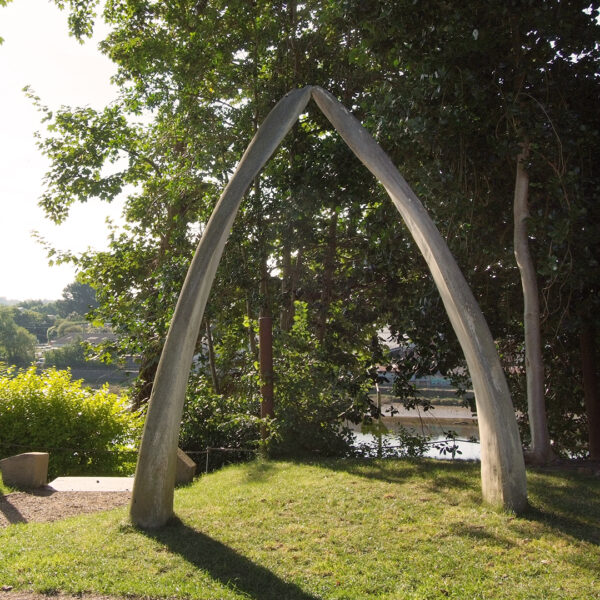
Lord Rhys
This sculpture of Lord Rhys ap Gruffydd is crafted from the remaining stump of a 220-year-old Turkey Oak tree that had to be felled. Carmarthen-based artist Simon Hedger created the sculpture, which depicts Lord Rhys holding a sword and spear.
Lord Rhys
The Pineapple House Wall
During the 19th Century a hothouse was constructed against the wall to cultivate exotic fruits, including pineapples, which were considered a symbol of wealth and hospitality. The hothouse was demolished in the 1920s.
The Pineapple House Wall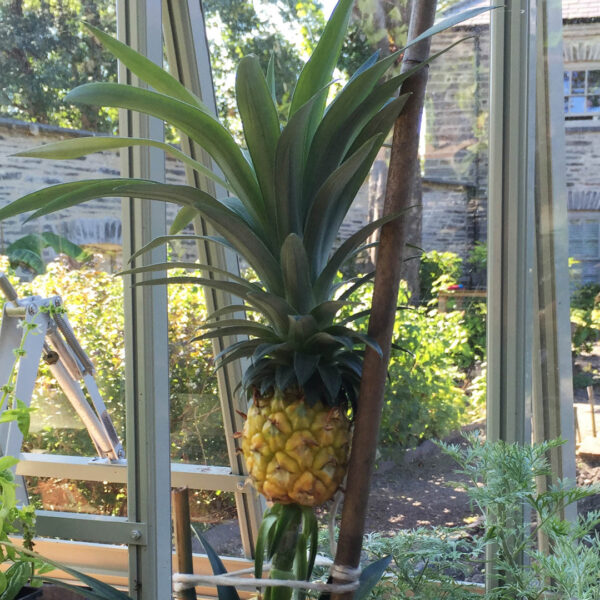
The Sword of Peace Sculpture
The inspiration behind the “Sword of Peace” stems from the adage “the pen is mightier than the sword,” emphasizing the power of words over violence. The sculpture stands as a testament to Lord Rhys’s foundational role in establishing the Eisteddfod at Cardigan Castle in 1176, celebrating creative expression.
The Sword of Peace
WWII Pill Box
In May 1940, during World War II, the Home Guard constructed a concrete pillbox on the battlements of Cardigan Castle to control the bridge over the River Teifi. This fortification was part of the United Kingdom’s defensive measures against potential enemy invasions.
WWII Pill Box
The Castle Lawn
The lawn offers visitors a serene environment. Historically, parts of the Castle were repurposed in the 18th and 19th centuries to create leisure spaces, and the lawn was at different points a bowling green, and latterly a tennis court. It is believed that the Lord Rhys’s original Hall lies deep beneath the lawn.
Grounds and Gardens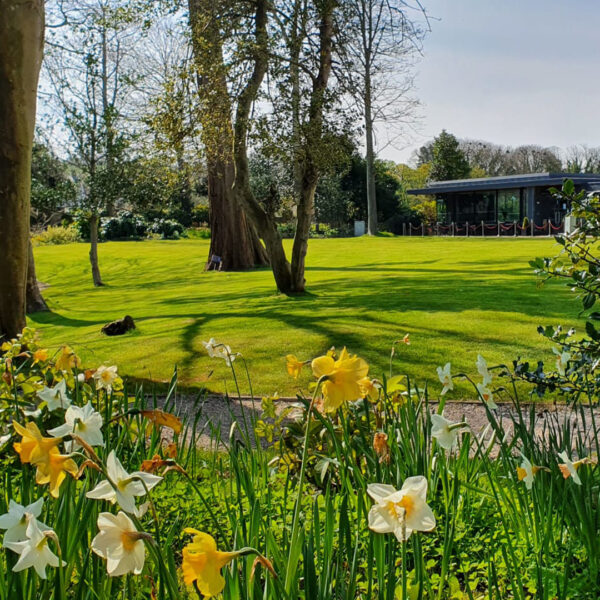
The Hanging Garden
The creation of the hanging garden is attributed to John Bowen, a local barrister who acquired the site in the early 1800s. He constructed Castle Green House and undertook extensive landscaping projects, including the hanging garden. Hanging gardens were traditionally added to provide depth and visual intrigue to architectural settings.
The Hanging Garden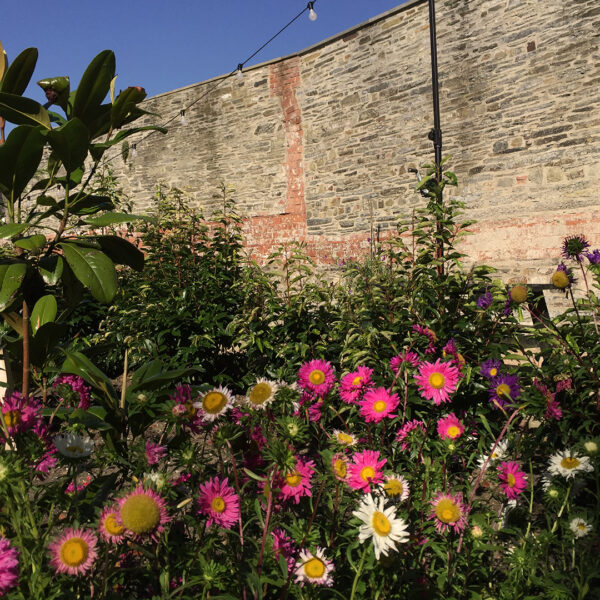
The Castle Playground
The Play area located in the lower site of the Castle, hosts a slide, outdoor games and climbing attractions and a picnic table, for our younger visitors.
Children’s Activities
The Regency Garden
Originally the Castle’s vegetable gardens would have provided the residents of Castle Green House kitchens with produce. Today the crops grown are used by the Castle’s onsite restaurant 1176 and reflect the seasonal availability when growing vegetables and soft fruit.
The Garden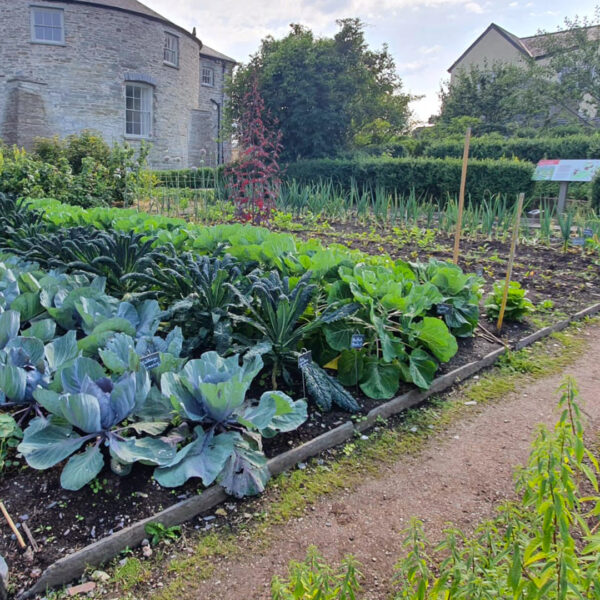
Castle Green House
The construction of the Georgian Castle Green House began in 1808 for John Bowen, utilising the foundations and a 13th-century round tower of the original Cardigan Castle. It was extended in 1827 by David Evans for Arthur Jones, the High Sheriff of Cardiganshire. The house became a Grade II* listed building in 1961. Today it houses exhibitions and is also an events centre and theatre space.
The Castle Green House